Controlled trials of pure beef tallow as a face or body moisturiser on people are still limited. Here is what we can say. Tallow is rich in palmitic, stearic and oleic acids. Your skin uses palmitic acid to make its own ceramides — a 2023 study on people showed palmitic acid put on the skin being built into them. In a lab model of damaged skin, palmitic and stearic acids improved the barrier's lipid structure. In small human studies, beeswax reduced water loss when properly formulated, and the plant oils we use improved hydration over a few weeks. So the balm is designed as a simple seal and softener: it slows water loss and softens skin. We don't claim it treats any skin condition.
The skin barrier and tallow
[1] Skin barrier lipids · Biochimica et Biophysica Acta, 2014
The skin's outer layer is held together by a mix of lipids — ceramides, cholesterol and free fatty acids — that keeps water in and irritants out. This is the standard reference on how that system works.
Elsevier — Read the paper →
[2] The skin barrier, updated · Progress in Lipid Research, 2023
A 2023 review of how ceramides, cholesterol and free fatty acids line up into the skin's barrier, in healthy skin and when the barrier is weakened. Tallow supplies fatty acids, one of those three lipid families.
Elsevier — Read the paper →
[3] Fatty acids and the barrier · International Journal of Cosmetic Science, 2024
In a lab model of damaged skin (skin samples stripped with tape), formulas containing palmitic and stearic acids — two of the main fatty acids in tallow — gave better barrier results than the formulas they were compared with. The authors suggest skin can use these fatty acids as building blocks for its barrier lipids. A lab test on skin samples, not a trial on people, and not a test of tallow itself.
Wiley — Read the paper →
[4] Skin turns palmitic acid into ceramides · Journal of Cosmetic Science, 2023
Volunteers used a lotion, a soap bar or a body wash containing palmitic acid that was labelled so it could be traced. After four weeks it had reached the skin's outer layer from every product, and the skin had lengthened it and built it into its own ceramides — the authors call this the first evidence of it in people. Palmitic acid is the main fatty acid in tallow (about a quarter of it). The study tested palmitic acid in other products, not tallow, and was run by Unilever scientists.
J Cosmet Sci — Read the paper →
[5] What tallow is made of · USDA FoodData Central
The US Department of Agriculture's lab figures for beef tallow: per 100 g, about 50 g saturated fat (mostly palmitic and stearic acids), 42 g monounsaturated (mostly oleic acid) and only 4 g polyunsaturated. That small polyunsaturated share is why tallow keeps well without added preservatives.
USDA — See the figures →
[6] Tallow & skin — a scoping review · Cureus, 2024
Reviewed 19 studies and found that tallow's make-up suits skin. It also found "significant research gaps", especially controlled studies of tallow as a cosmetic on people. We agree: more human research is needed.
Cureus — Read the paper →
Beeswax and plant oils
[7] Beeswax and water loss · AAPS PharmSciTech, 2017
In a small study in volunteers, a gel-cream containing tiny beeswax-based particles reduced water loss through the skin and raised skin hydration after 28 days. It supports beeswax's role as a seal that slows water loss when properly formulated — though that was a lab-made gel-cream, not a balm like ours.
Springer — Read the paper →
[8] Beeswax in skincare · Journal of Cosmetic Dermatology, 2023
A review describing beeswax as an occlusive (slows water loss), humectant and emollient (softens). It draws on five studies, three of them in animals, and two of its authors work for Burt's Bees, a beeswax brand. The authors call for more research.
Wiley — Read the paper →
[9] Jojoba and coconut oils for dry skin · SKIN: The Journal of Cutaneous Medicine, 2018
32 adults with dry skin used jojoba, almond or coconut oil, or petroleum jelly, twice a day for two weeks. All four raised skin hydration about equally, and most people preferred the plant oils. A small pilot, and people knew which product they had.
SKIN — Read the paper →
[10] Coconut oil for dry skin · Dermatitis, 2004
A small randomised, double-blind trial: 34 adults with dry skin used coconut oil or mineral oil on their legs twice a day for two weeks. Both improved skin hydration about equally, with no side effects. A small, short study — and a test of the oil, not of STERABALM.
Dermatitis — Read the paper →
Other ingredients — early, small studies
[11] Argan oil and skin elasticity · Clinical Interventions in Aging, 2015
60 women after menopause applied argan oil to one forearm for 60 days, and skin elasticity measured higher there. Small and short, and a test of the oil on its own, not of STERABALM.
Dove Press — Read the paper →
[12] Sea buckthorn and skin oil · Journal of Pharmacy & Bioallied Sciences, 2010
10 volunteers used a cream with 1% sea buckthorn fruit extract on one cheek and the same cream without it on the other, for 8 weeks. The sea buckthorn side produced less oil (sebum). Very small, and an extract rather than the oil REFRESH uses.
PMC — Read the paper →
[13] Helichrysum on human skin · J Ethnopharmacology 2023 · J Invest Dermatol 2017
Fabric carrying a helichrysum extract was tested on volunteers' skin that had been irritated on purpose for the test. It caused no irritation itself, and one version did best at protecting the skin, measured by water loss, hydration and redness. Helichrysum has long been used on skin around the Mediterranean; this is one of its first tests on people. Also: in a face cream with vitamin E used twice a day, helichrysum essential oil — the oil REFRESH uses — cut pollution-type damage to skin oils (oxidised squalene) by 28% in four weeks. That one is a short conference report from L'Occitane's scientists, and the oil was combined with vitamin E (Journal of Investigative Dermatology, 2017).
Elsevier — Read the paper →
JID 2017 — Read the report →
[14] Lemongrass oil on skin · Cosmetics, 2023
14 volunteers put a gel with 5% lemongrass essential oil on a patch of forearm twice a day for two weeks. When the skin was then briefly irritated as a test, the treated patch showed less redness, swelling and water loss than untreated patches. Small and short. Lemongrass can also cause allergy in some people, so patch test first.
MDPI — Read the paper →
[15] Basil on skin · DARU Journal of Pharmaceutical Sciences, 2011
11 men (average age 48) used a cream with 3% basil extract and the same cream without it for 12 weeks. Only the basil cream raised skin moisture, and skin measured smoother and less rough. Small and single-blind, and a basil extract rather than the essential oil REFRESH uses.
PMC — Read the paper →
[16] Thyme on skin · J Cosmetic Dermatology 2021 · Microorganisms 2022
In a double-blind, placebo-controlled trial, women used a cream with a 2% thyme preparation, and their facial lines measured smaller. Run by the company that makes the preparation, and a thyme extract with lecithin rather than the essential oil REFRESH uses. Also: in lab tests of five essential oils against bacteria that live on skin, thyme essential oil was the strongest (Microorganisms, 2022). A lab test, not a test on people.
Wiley — Read the paper →
Microorganisms 2022 — Read the paper →
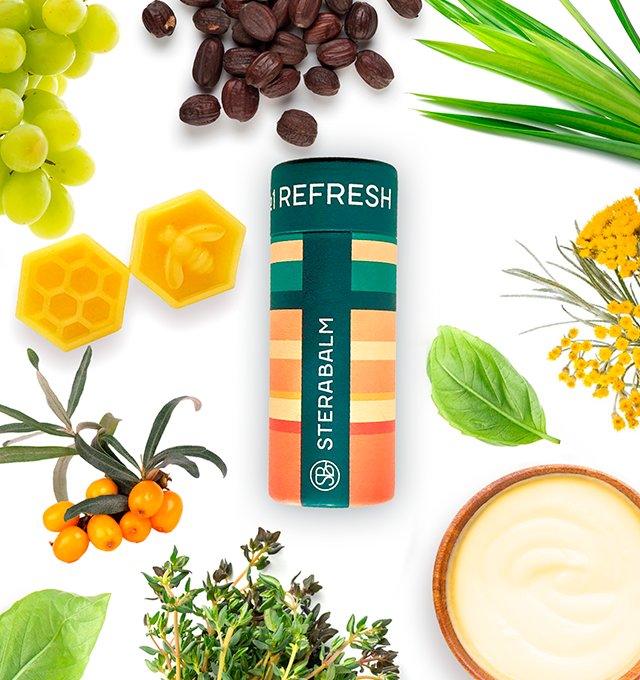
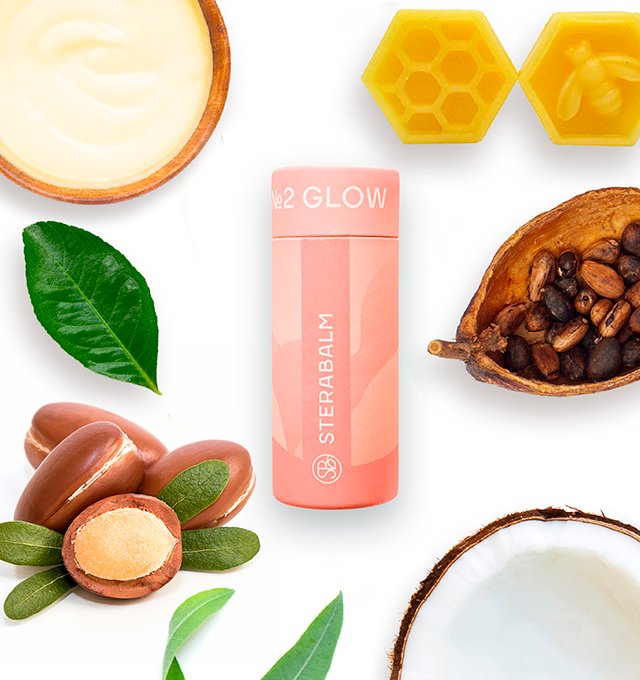
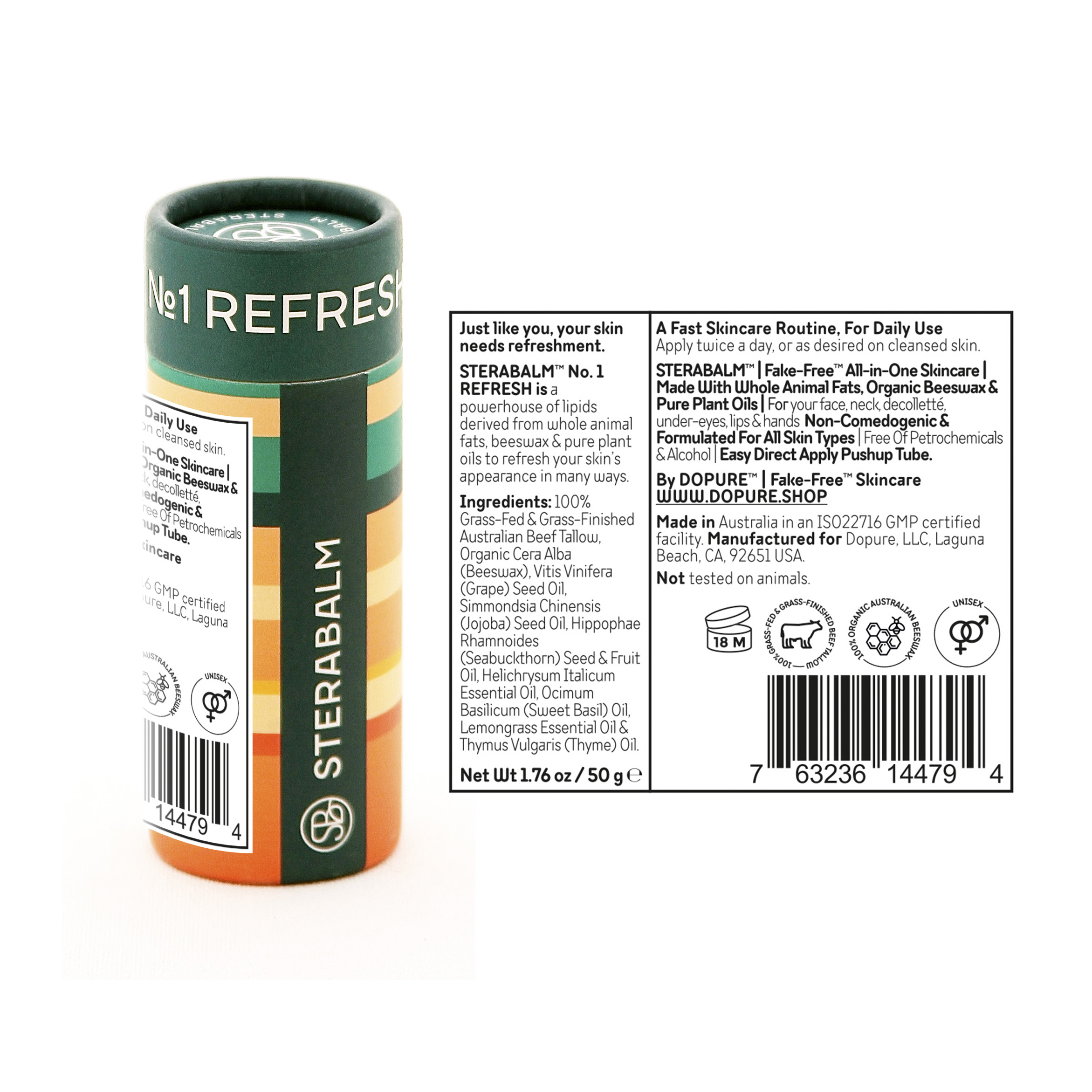
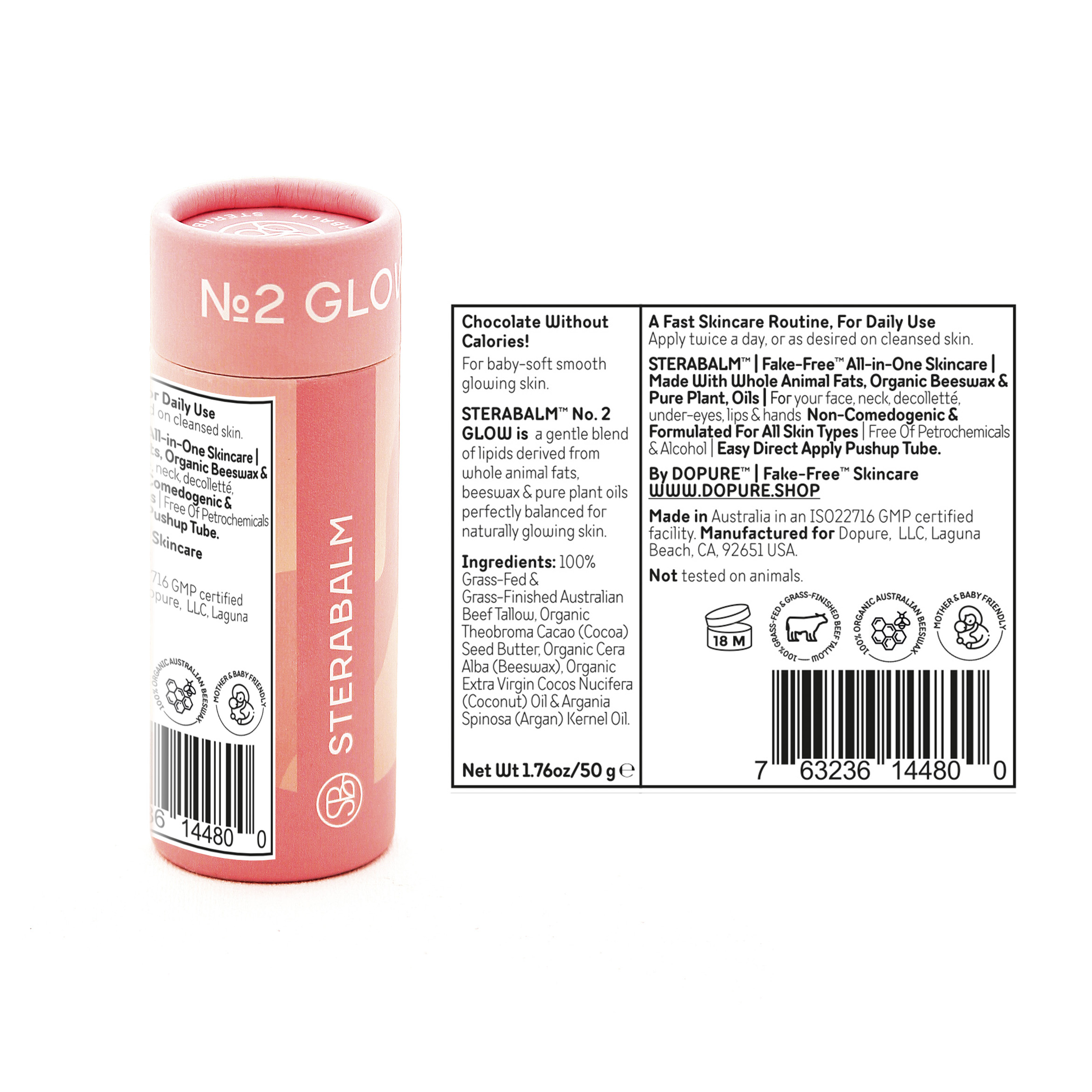
 Made in Australia
 No Petrochemicals · No Alcohol
 Grass-Fed Beef Fat
 Organic Beeswax
 Plant Actives
 No Synthetic Fragrance